
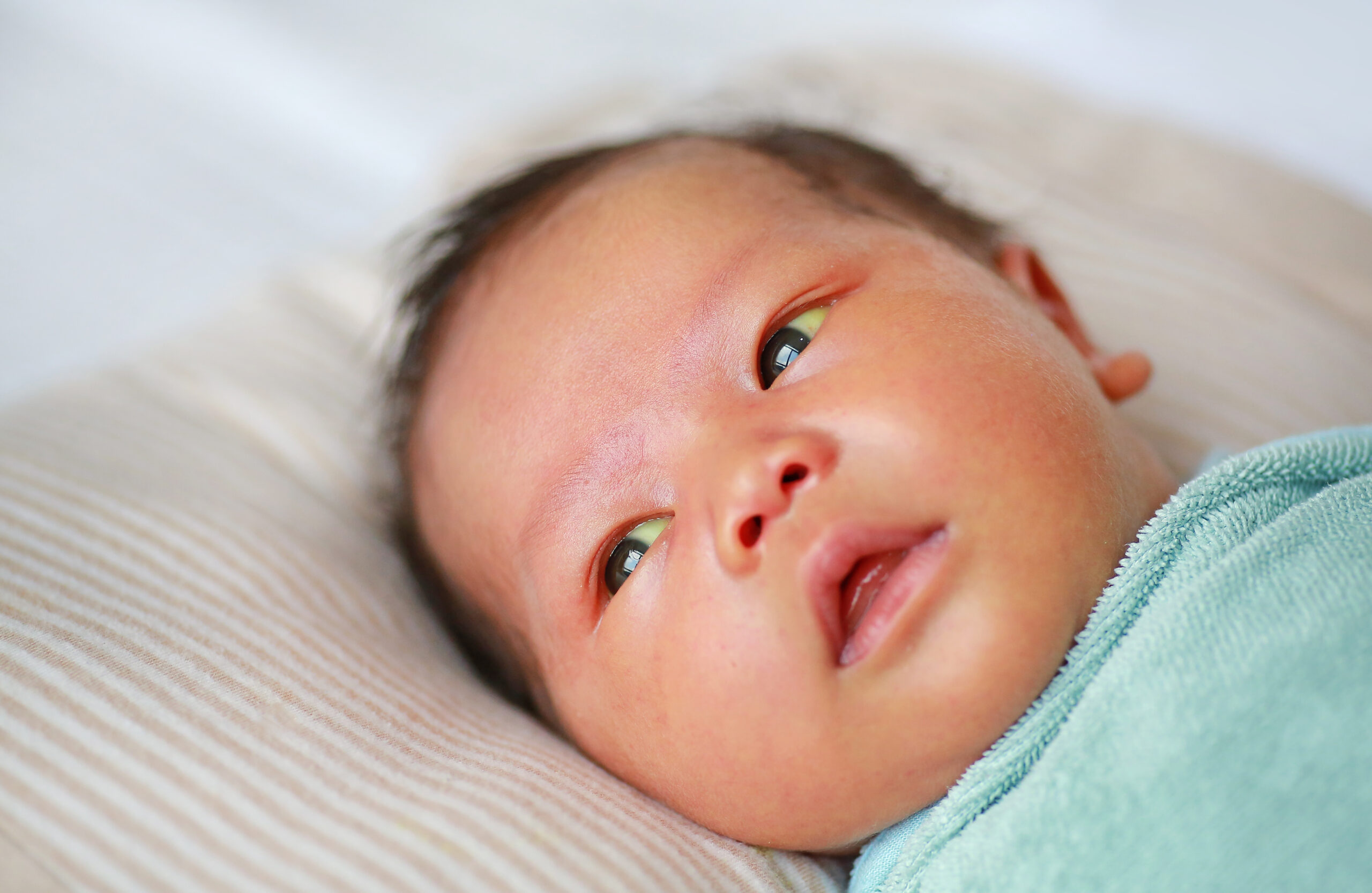
Newborn jaundice: a common and usually temporary condition
Newborn jaundice is a frequent finding in the first week of life. It is caused by elevated levels of bilirubin, a yellow pigment that forms when red blood cells are broken down. As a result, the skin and the whites of the eyes may appear yellowish.
Up to around 60% of full-term newborns and an even higher proportion of preterm infants develop visible jaundice during their first days of life. In most cases, this is part of normal newborn adaptation and resolves without complications. Because bilirubin levels can rise quickly in some infants, timely screening and appropriate follow‑up play an important role in newborn care.
What is bilirubin?
Bilirubin is a natural by‑product of the body’s normal turnover of red blood cells.
- Red blood cells have a limited lifespan and are continuously broken down
- Hemoglobin from these cells is converted into bilirubin
- Bilirubin is normally processed by the liver and excreted from the body
In older children and adults, this process is efficient. In newborns, however, several factors make bilirubin accumulation more likely.
Why newborns are more prone to jaundice
1. Higher bilirubin production after birth
Newborns have:
- A relatively high red blood cell count
- Shorter red blood cell lifespan compared to adults
This leads to increased bilirubin production in the first days of life.
2. Immature liver function
The newborn liver is still developing and is less efficient at processing bilirubin, especially in the first week after birth. This temporary immaturity slows down bilirubin breakdown and clearance.
3. Early feeding patterns
In the first days after birth:
- Feeding volumes may be small
- Breastfeeding is still being established
Reduced intake can delay bilirubin excretion via stool, contributing to higher bilirubin levels in some newborns.
When jaundice requires closer attention
While most newborn jaundice is mild and self‑limiting, bilirubin levels can become high enough in some infants to require monitoring or treatment.
Factors that may increase risk include:
- Prematurity
- Blood group incompatibility
- Bruising during delivery
- Family history of significant jaundice
Because it can be difficult to accurately assess jaundice visually—especially across different skin tones—objective screening methods are often used in clinical practice.
How newborn jaundice is screened and monitored
Jaundice assessment may include:
- Visual examination by trained healthcare professionals
- Transcutaneous bilirubin (TcB) measurements
- Blood bilirubin testing when indicated
In recent years, digital, image‑based screening tools have been developed to support bilirubin assessment without blood sampling.
Picterus Jaundice Pro is an example of such a digital solution. It is a CE‑marked medical device used by healthcare professionals to support newborn jaundice screening through calibrated image analysis. Tools like this are increasingly used in hospitals, primary care, and follow‑up settings to help identify newborns who may need additional evaluation.
Why early screening matters
Early identification of rising bilirubin levels helps healthcare providers:
- Determine whether simple observation is sufficient
- Plan appropriate follow‑up after discharge
- Decide when confirmatory testing or treatment is needed
Screening supports safer transitions from hospital to home and contributes to consistent newborn care pathways.
Key points at a glance
- Newborn jaundice is common and usually part of normal adaptation after birth
- It is caused by increased bilirubin production and temporary immaturity of liver function
- Most cases resolve naturally, but some infants require monitoring or treatment
- Objective screening methods help assess bilirubin levels reliably
- Digital tools such as Picterus Jaundice Pro are used by healthcare professionals to support newborn jaundice screening